Diagnostic and Translational Molecular Approaches for Leprosy
In the laboratory, we develop and implement molecular diagnostic tools to improve the detection, characterization, and clinical management of leprosy. Our work includes the development and validation of sensitive, field-friendly qPCR assays for the detection of Mycobacterium leprae and Mycobacterium lepromatosis, enabling reliable diagnosis in both clinical and low-resource settings. We also perform routine molecular screening for drug resistance in M. leprae, supporting surveillance efforts and informing patient treatment strategies. In parallel, we are developing innovative molecular approaches to assess M. leprae viability directly in clinical samples, with the aim of replacing or substantially reducing reliance on animal models. Together, these diagnostic and viability tools are leveraged to evaluate treatment efficacy and to support the rational development and optimization of new therapeutic regimens.
GENOMICS OF THE LEPROSY BACILLI
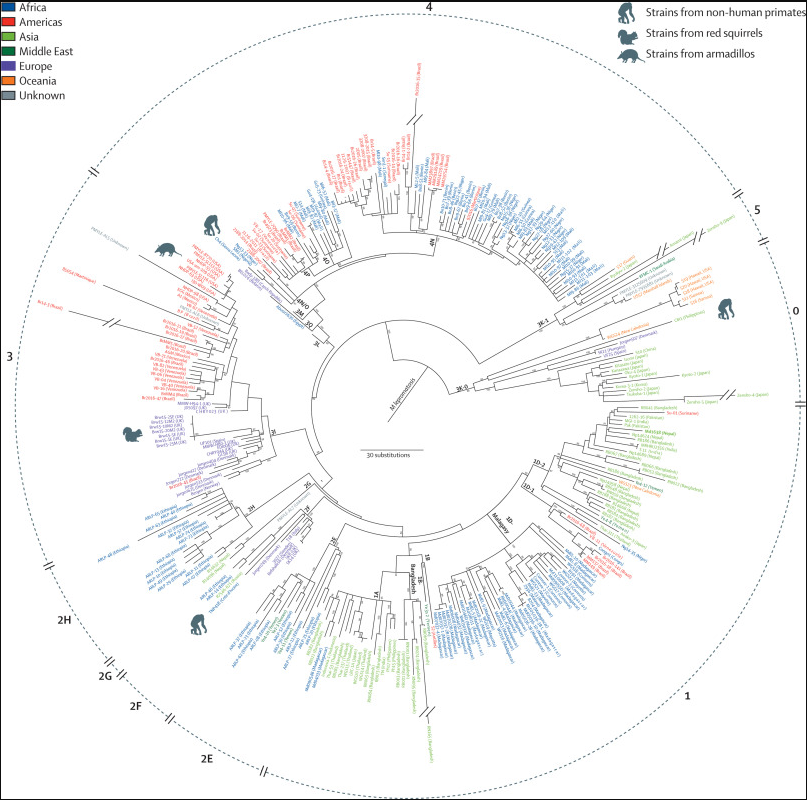
The Avanzi Lab develops and applies innovative approaches to sequence leprosy bacilli directly from clinical samples, overcoming the long-standing limitations imposed by the lack of in vitro culture systems. These genomic data are leveraged to investigate the evolution of Mycobacterium leprae across time by integrating modern and ancient DNA, providing a unique perspective on pathogen emergence, diversification, and long-term transmission dynamics. In parallel, we use whole-genome sequencing, molecular profiling, and comparative genomics to identify and monitor mutations associated with resistance to first-line therapies. Candidate resistance markers are functionally assessed and validated using surrogate mycobacterial systems, strengthening the interpretation of genomic findings. Together, these approaches advance our understanding of leprosy biology, support molecular drug-resistance surveillance, and inform the development of improved treatment strategies.

Transmission of the leprosy bacilli
Using a One Health framework, the Avanzi Lab investigates the transmission pathways of leprosy bacilli across human and non-human hosts, as well as the persistence of Mycobacterium leprae and M. lepromatosis in environmental reservoirs. By integrating molecular detection, genomic data, and ecological sampling, we examine how transmission occurs at the human–animal–environment interface. In parallel, we assess biological, ecological, and social factors that contribute to infection risk, aiming to explain why transmission is sustained in some settings but not others. This integrative approach provides a mechanistic understanding of leprosy transmission and informs targeted strategies for disease control and prevention.